

Chapter 1
Technocratic Models and Governmental Practices in the Viceroyalty of New Spain in the Eighteenth Century
This work aims to investigate the case study of the Marquis of Branciforte, viceroy of New Spain, at the end of the eighteenth century. In particular, the study uses the existing bibliographic material and some archival evidence to highlight how, during the last years of Spanish colonisation, new governance techniques were put in place. In order to do so, the specific episode of the smallpox epidemic outbreak in 1797 has been used to demonstrate how statistical technologies and biopolitics constituted fundamental elements of the pair between power and knowledge. The case study aims to demonstrate the importance of knowledge in managing political processes and, consequently, the importance of the viceroy’s personal skills. The new ruling class that formed from the beginning of the eighteenth century onwards also acquired more individual skills through managerial and governmental experience gained in transnational contexts. It became common practice to build political careers through experiences gained in both Europe and America. More and more, the idea developed that the ruler should have a technical and practical training, no longer exclusively linked to court relations, but also through theoretical and practical knowledge (the most obvious example is military training and the administrative experience associated with it).
The change of dynasty on the Spanish throne, from the Habsburgs to the Bourbons, coincided with the spread of Enlightenment ideas in Europe and the Spanish elite’s realisation of the backward state of economic development in the mother country and the colonies. These can be considered as the prerequisites that led, in the second half of the eighteenth century, to a rethinking of the management model of the imperial system and to the attempted integration between the economy of the Peninsula and the (very differentiated) economies of the American viceroyalties (Bonialian & Hausberger, 2017). Spanish intellectuals and politicians began to question the colonial economic structure based on the binomial production of raw materials and importation of finished products, or at least they began to question the narrative that was being told about it (Semprat Assadourian, 1982; Bonialian, 2011).
Ultimately, eighteenth-century Spain carried with it the narrative of a world shrouded in darkness that could only be illuminated by Enlightenment ideas, thanks to science, the rule of law and the centrality of man. However, on closer inspection, the spread of the Enlightenment in the Spanish world and the rest of Europe seems less linked to the idea of the triumph of reason over superstition and much more explicable, by contrast, with the need for new economic institutions and practices (Noel, 2009). The ongoing process could be the prodrome of the subjectivisation of the individual as a consumer, through the definition of new forms of control and governance (Foucault, 1984; Humphreys, 2006).
Contrary to the established narrative of a colonial economy exploited by the mother country, the two main Spanish territories in America, New Spain and Peru, had managed to consolidate an internal market that more recent studies have shown to be respectable (Semprat Assadourian, 1982; Grafe & Irigoin, 2011). In particular, despite attempts to settle feudalism the American colonies – only partially successful – in these two areas, mining, based on the extraction of silver and mercury, proved to be a vital stimulus for the creation of an authentic regional market. Metal mining, given its specialised nature and the need for investment, contributed to the formation of a class of salaried workers (miners) who tended to polarise in the mining areas, laying the foundations for a consumer market (Semprat Assadourian, 1982). Complementary markets such as textiles (thanks to the obrajes system)1 and agricultural products (essential for food consumption) were grafted onto this market (for a thorough discussion see: Salvucci, 1987; Grijalva, 1990). This created a supra-regional internal market consisting of the interaction between New Spain and Peru, in which textiles, foodstuffs, drinks, tools as well as mining products circulated, integrated with the Pacific market, to which American silver allowed exchange with eastern products (silk, cotton, etc.) (Semprat Assadourian, 1982).
It seems clear that the economic model of the American colonies widely represented in Spain – and long studied and deemed plausible – was quite different from reality (Baskes, 2018). In short, the empirical evidence seems to demonstrate the existence of a developed, essentially capitalist market based on agriculture, trade and manufacturing. Of course, this should not lead us to think that the American viceroyalties had a degree of economic development equal to that of Western Europe. The economy of Spanish America suffered from a lack of adequate infrastructure; roads, bridges and ports were limited and often inadequate. High transaction costs persisted from inefficient and unconnected levels of government. Finally, para-feudal practices related to the organisation of labour – such as mita and repartimento2 – persisted, which, despite the efforts of the legislature, were strongly rooted in colonial societies, with obvious damage to the freedom of movement of productive factors and the distribution of wealth (Bonialian, 2011; Burkholder & Johnson, 2012; Herzog, 2018).
In this phase, explanatory works, studies, pamphlets and proposals multiplied – in accordance with a consolidated tradition of cameralismo and arbitrismo3 – addressed to the sovereign to provide useful solutions to resolve the stalemate in which the economy of the Spanish monarchy had ended, both in the peninsular dimension and in the Atlantic projection (Uztariz, 1724; Campomanes, 1762). These publications were ideally synthesised in Charles III’s 1778 enactment of the Reglamento y aranceles reales para el comercio libre de España a Indias (Royal Regulations and Tariffs for Free Trade from Spain to the Indies),4 a measure that, as part of a mercantilist policy, would stimulate the revival of the national economy (Florescano, 1979).
A possible starting point for understanding and framing the formation of a transactional elite made up of bureaucrats technicians is – alongside the propagation of Enlightenment ideas – the spread of educational institutions specialising in the applied sciences, also in the American territories of the monarchy (Pietschmann, 1991). This process had facilitated the creation and strengthening of a Creole, Indigenous or Mestizos ‘intellectual aristocracy’ that had soon moved from the business world – which had been its breeding ground (landowners, miners, manufacturers, merchants, etc.) – to public administration, with massive entry into the local and central administrative roles of the American viceroyalties.5 The existence of an indigenous ruling class had prompted a heated debate in Spain, ever since Ferdinand VI’s accession to the throne, on whether the same administrative reforms that were being adopted in the mother country should be applied in the American territories.6 We can probably refer to this historical phase to contextualise the emergence of a class of technical administrative officials, trained in the teachings of the Enlightenment and experts in the new ‘technologies of government’ (statistics and economics in particular) (Dean, 1996; Larsson, 2020). The Count of Aranda, in a memorial sent to King Charles III on 23 May 1768, commenting on the introduction of the intendancies in the territories of Spanish America, emphasised the importance of selecting the most qualified personnel, without taking into account either racial or social origin.7
In the eighteenth century, the viceroys of Spanish America were pivotal figures in the administration and governance of the vast Spanish colonies. These viceroys, appointed by the Spanish Crown, were tasked with maintaining order, collecting taxes, and implementing imperial policies across the territories under their control. Their roles were marked by a delicate balance of enforcing royal authority while navigating the complex social and economic landscapes of the colonies. The viceroys’ power was not only political but also deeply intertwined with the control of knowledge and information, which brings us to a broader theoretical framework proposed by Michel Foucault.
Foucault’s concept of power and knowledge offers a valuable lens through which to analyse the functioning of colonial administrations. According to Foucault, power and knowledge are inextricably linked; the exercise of power perpetuates and is perpetuated by the production and control of knowledge. In the context of Spanish America, the viceroys’ authority depended significantly on their ability to gather, manage, and utilise information about the colonies. This included knowledge about the local geography, resources, population demographics, and cultural practices. The viceroys’ effectiveness in governance was thus rooted in their command over this knowledge, which enabled them to administer the colonies efficiently, suppress resistance, and integrate the colonial peripheries into the imperial centre (Afanador-Llach, 2023).
By examining the viceroys’ roles through Foucault’s framework, we can better understand the mechanisms of colonial power and the centrality of knowledge in sustaining imperial dominance. The viceroys’ governance was not merely a matter of enforcing laws or collecting revenues but involved a complex interplay of surveillance, documentation, and regulation. This convergence of power and knowledge highlights the sophisticated nature of colonial rule and provides deeper insights into the functioning of the Spanish empire in the eighteenth century. Thus, the viceroys’ administration can be seen as a concrete embodiment of Foucault’s abstract theories, illustrating how knowledge production and power dynamics operated in a historical and colonial context.
Foucault’s conceptualisation of power transcends traditional notions that conceive of it as a static possession wielded by individuals or institutions. Instead, he portrays power as a ubiquitous and multifaceted force that permeates every aspect of social life. Power operates not only through overt repression but also through subtler mechanisms of discipline, surveillance, and normalisation. Institutions such as prisons, schools, hospitals, and governmental bodies exercise what Foucault termed ‘disciplinary power’, regulating behaviour and shaping subjectivities through techniques of observation, classification, and control (Foucault, 1977; Rouse, 2005).
Crucially, Foucault emphasises that power is not exercised in a unidirectional manner but is inherently productive. It not only constrains individuals’ actions but also enables and shapes them, producing particular forms of subjectivity and social relations (Miller & O’Leary, 1994). This productive aspect of power is exemplified in Foucault’s notion of biopolitics, which refers to the ways in which power operates at the level of populations, regulating bodies, health, reproduction, and social life. Biopolitics entails strategies of managing life and death, controlling populations, and shaping societal norms and behaviours to serve political, economic, and ideological ends (Foucault, 1977; 1980; Miller & Rose, 1990). Central to Foucault’s analysis is the recognition that power is intimately intertwined with knowledge. Knowledge, far from being objective and neutral, is deeply entangled with power relations and operates within specific historical and social contexts. Foucault introduces the concept of the ‘episteme’, which refers to the overarching frameworks of knowledge that shape what can be thought, said, and known within a particular historical period. These epistemes establish the conditions of possibility for knowledge production and determine what counts as valid or legitimate knowledge (Foucault, 1980).
Furthermore, Foucault highlights the role of institutions in the production and dissemination of knowledge. Institutions are not neutral arbiters of truth but active agents in shaping and perpetuating power structures. They generate knowledge that reinforces existing hierarchies, norms, and values, thereby legitimising and reproducing prevailing power relations (Townley, 1993). The concept of ‘power-knowledge’ encapsulates the inseparable relationship between power and the production of knowledge. Power generates knowledge, and knowledge, in turn, reinforces power, creating a feedback loop that sustains existing social arrangements. This dynamic interplay between power and knowledge underscores the complexity of social control, resistance, and change (Burchell et al., 1991).
The interrelation between governmentality and technocracy offers profound insights into the evolution of government during the Enlightenment era. Foucault’s studies illuminate how the rationalities of governmentality intersected with the expertise of technocrats, shaping the administration of populations and the exercise of power (Foucault, 1982; 1988; Dean, 1999). In particular, the rise of a new class of technocratic governors from the private sector, royal factories, and the army played a crucial role in this evolution, transforming the dynamics of government in profound ways. Foucault’s concept of governmentality refers to the strategies, techniques, and rationalities employed by governments to govern populations. During the Enlightenment, there was a notable shift towards new forms of governance characterised by the rationalisation and management of populations. Governmentality encompassed not only formal institutions of power but also the various mechanisms and discourses through which individuals were governed. This shift towards rationalised government laid the groundwork for the emergence of technocracy (Callon, 1991; Gordon, 1991).
The rise of a new class of governor technicians marked a significant departure from traditional forms of government, where authority was often based on hereditary privilege or political patronage. Instead, technocrats gained influence and power through their expertise and proficiency in managing various aspects of government, from economics to public health (Feenberg, 1994). In the realm of economics, for example, the Enlightenment witnessed the rise of political economists such as Adam Smith, who advocated for the rationalisation of economic processes and the importance of free markets against mercantilist doctrines. These political economists played a key role in shaping governmental policies related to trade, taxation, and industrial development, thereby contributing to the emergence of a technocratic approach to economic governance which was achieved through the appointment of rulers chosen not only for their membership of the nobility, but also for a specific educational background. Similarly, in the field of public health, advancements in medical science led to the establishment of expert-led institutions tasked with managing issues such as sanitation, disease prevention, and healthcare provision. These institutions, often staffed by physician administrators, applied scientific principles to the management of public health, reflecting the influence of technocratic rationality in this domain (Foucault, 2003). The military also served as a significant site for the development of technocratic expertise during the Enlightenment. Military engineers, for example, played a crucial role in the design and construction of fortifications, roads, and other infrastructure projects essential for the defence and administration of territories. Their expertise in engineering and logistics contributed to the development of technocratic approaches to military governance.
Overall, the interrelation between governmentality and technocracy during the Enlightenment era marked a significant transformation in the dynamics of government. The rise of a new class of governor technicians reshaped the exercise of power and the management of populations in profound ways. It was a response to the growing complexity of the colonial administration. As the colonies expanded, the need for skilled personnel to manage public works, urban planning, and resource extraction became evident. By combining the rationalities of governmentality with the expertise of technocrats, Enlightenment governments sought to govern more efficiently and effectively, laying the groundwork for the modern administrative state.
Miguel de la Grua Talamanca Marquis of Branciforte was born in Palermo, the cadet son of a family of the Sicilian high nobility, probably in 1750; his father Vincenzo was for several years captain-justice officer of the city of Palermo (first magistrate), governor of the Monte di Pietà between 1705 and 1707 and chamberlain to Victor Amadeus II of Savoy, King of Sicily from 1713 to 1720. Miguel de la Grua Talamanca moved to Madrid at a very young age, in 1759, following his father, who had been called back to court following the coronation of Charles III on the Spanish throne. This first element allows us to hypothesise the existence of factional ties linking Vincenzo de la Grua Talamanca to the new Bourbon dynasty, probably also due to the prominence the family had within the city’s elite, Vincenzo’s service to the city of Palermo, his activity in the service of the Savoy family and, last but not least, Charles III’s desire to create a new sense of proximity of the Sicilian nobility to the new ruling house. The fact is that young Miguel grew up and was trained at the court of Madrid – far from his birthplace – where he was initiated into a military career at a very young age.
In 1780, Miguel de la Grua Talamanca became a brigadier of the Italian company of the Royal Guards (established by Philip V). Between 1781 and 1783, he was engaged in the Balearic Islands against the British, distinguishing himself in the battle for the conquest of Mahon. In March 1782, he was promoted to the rank of field marshal for merits acquired in the war. In 1784 he was promoted to the rank of lieutenant general of the army and, almost at the same time, appointed commanding general of the Canary Islands, a position he held until 1789 (Orozco Linares, 1985).
The technical education and training of Marquis of Branciforte, La Grua Salamanca, within the Spanish army in the eighteenth century, were pivotal in shaping his military career. Immersed in a period marked by significant advancements in military science and technology, Branciforte benefited from rigorous training and exposure to contemporary military strategies. His education likely encompassed not only traditional combat tactics but also the emerging principles of engineering, artillery, and fortification that were transforming European warfare. This comprehensive military education equipped Branciforte with the expertise and skills necessary to navigate and influence the complex military landscape of his time, contributing to his distinguished service in the Spanish army.
The historiographical debate on the origins of management and more generally of the organisation of institutions has for some time identified embryonic elements in military organisation (Paret, 1997; Osman, 2008; Sánchez, 2009). The divisional organisation model applied by manufacturing companies from the mid-nineteenth century onwards – inspired by the structure of the French army during the Napoleonic period – was also considered a reference for the organisation of the state, probably even before its application in manufacturing. This new organisational structure responded to the changed conditions of society. Whereas in an ancienrégime society, organisational and management forms were characterised by a low degree of formalisation and strong personalisation, eighteenth-century society, given its structure, required more complex and formalised models (Kuethe & Kenneth, 2014).
The case of the Spanish monarchy – starting from the promulgation of the decretos de Nueva Planta (decrees of New Plant) by Philip V between 1707 and 1716 – well demonstrates the use of organisational-bureaucratic models, more rational, with better defined responsibilities and hierarchies, according to schemes already in use by the army.8 On the other hand, the Spanish armed forces had been among the first subjects of a profound reorganisation in an Enlightenment key. In 1711, the Superintendencia de Ejército (Army Superintendence) had been created and, in 1717, the Intendencia General de Ejército y Marina (Army and Navy General Superintendence). The model of the intendencies was also passed on to the civil administration within a year by a decree of 1718 (Tortella, 2000).
In 1748 the Ordenanzas para el Gobierno Militar, Político y Económico de su Armada Naval (Ordinances for the Military, Political and Economic Government of Royal Navy) had been issued by Ferdinand VI, followed in 1768 by the Ordenanzas de Su Majestad para el Régimen, Disciplina, Subordinación y Servicio de sus Exércitos (Ordinances for the Regime, Discipline, Subordination and Service of His Majesty’s Armies) by Charles III. These were acts aimed at modernising, rationalising and reorganising the navy and the army according to principles of remote control, autonomy and responsibility. In this way, while maintaining a command structure in which social class was still important, a codified hierarchical organisation was created in which responsibilities, chains of command and information flows were clearly delineated. This was nothing new; Oliver Cromwell’s New Model Army (1649–60) had already developed a ‘divisional’ structure based on hierarchy and some degrees of autonomy (Firth, 1972). Even the French army, at the same time as the ordinances of Ferdinand VI and Charles III, had been reorganised by Count de Broglie (Pichichero, 2017). The Marquis of Branciforte performed his military service in an army that had been profoundly transformed by the reforms initiated in the first decades of the century. In the new army, traditional military disciplines were flanked by engineering, administrative and management notions, the result of a profound rationalisation process.
The army can be understood, according to Foucault, as a governmental and management system through various lenses, each highlighting its unique functions and structures within the broader framework of governance. It operates on a hierarchical command structure, with clearly defined lines of authority and responsibility. At the top of this hierarchy is the military leadership, which includes officers of various ranks who are responsible for making strategic decisions and overseeing operations. This hierarchical structure mirrors the organisational principles of many governmental institutions, with centralised decision-making and a chain of command (Foucault, 2007). Discipline is a cornerstone of military governance, enforced through a system of regulations, codes of conduct, and disciplinary procedures. Soldiers are expected to adhere to strict standards of behaviour and performance, with deviations often met with punitive measures. This emphasis on discipline mirrors the regulatory functions of government, which seeks to maintain order and compliance within society. Finally, the army is tasked with managing a wide range of resources, including personnel, equipment, and supplies. This requires sophisticated logistical systems to ensure that resources are allocated efficiently and effectively. From managing supply chains to coordinating troop movements, the army’s logistical capabilities resemble those of a complex administrative apparatus, responsible for the allocation and distribution of resources within a defined territory (Kontour, 2012).
It is not difficult to imagine how – in the presence of a remodelling of the Crown’s bureaucratic organisation, within the rationalisation process initiated by both the accession to the throne of Philip V of Bourbon and the spread of Enlightenment ideas – the army was considered an excellent reservoir from which to draw personnel trained with the new organisational ideas and already in possession of a modern hierarchical vision (Hoskin & Macve, 1988). It seems probable that, in some way, such models became part of the ‘social capital’ of those cadets later inserted into the roles of government in the various centres of the vast Spanish empire.
Miguel de la Grua Talamanca was appointed viceroy of New Spain on 26 March 1794. The appointment did not come as a surprise considering that in 1790 la Grua had married María Antonia de Godoy y Álvarez de Faria, sister of Manuel Godoy, Prince de la Paz, who had been appointed Prime Minister by Charles IV in 1791 (Alcázar Molina, 1945). In the same year, la Grua received the title of Great of Spain and, in 1794, a few months after being appointed viceroy, also the Golden Fleece (Ceballos-Escalera y Gila, 2000). In the space of a few years, thanks to a very efficient family and relational network, the Marquis of Branciforte managed to sequence all the fundamental steps to build a prestigious career at court. Certainly, in the career models of eighteenth-century Spanish government officials, persistences related to ancien régime relational models still remain. The marriage with María Antonia de Godoy constitutes a decisive element that demonstrates, once again, the importance of (strong) family ties. While the elevation of la Grua Talamanca to Grand Duke of Spain responded to the new policy, adopted by the Bourbons, of including the non-Spanish nobility in the highest roles at court, according to an idea of a ‘global’ monarchy.
Miguel de la Grua Talamanca’s work as viceroy was characterised, on the one hand, by the partial failure of the administrative reorganisation of the viceroyalty based on the intendancies. This was the plan originally drawn up by José de Galvez between 1765 and 1769, and later promulgated by Charles III in 1786 as Real Ordenanza para el Establecimiento e Instrucción de Intendentes de Ejército y Provincia en el Reino de la Nueva España. On the other hand, the viceroyal government of the Marquis of Branciforte was affected by a permanent state of war, first with revolutionary France and then with England. Both events forced the viceroy to reorganise the colonial militia with an increase in the number of regiments and soldiers engaged and consequently an increase in military expenditure. A further consequence of the state of conflict was the confiscation and management of the property of first French and then English subjects, operations for which the viceroy was accused of corruption and pursuit of personal interests. The accusations of embezzlement against the Marquis of Branciforte were also formalised by the Ayuntamiento (municipality) of Mexico City in a deed of 1796, but never proven in court, which nevertheless left the viceroy with a reputation as corrupt (Navarro García & Pópulo Antolín Espino, 1972).
The eruption of smallpox epidemics in eighteenth-century New Spain posed a severe threat to the population, necessitating immediate and effective intervention from the colonial authorities. In response to the widespread devastation caused by the disease, the government adopted a series of rational measures rooted in Enlightenment principles of reason, science, and empirical evidence. This rational approach marked a significant departure from earlier, more superstitious methods of disease control, reflecting a growing commitment to scientific and administrative efficiency. By leveraging contemporary medical knowledge and organisational strategies, the government aimed to mitigate the impact of the epidemic, demonstrating a forward-thinking approach to public health that sought to protect and improve the well-being of its citizens.
Foucault’s concept of the government of the human body focuses on the ways in which power operates at the level of individual bodies. Historically, societies have employed various techniques to govern and regulate bodies, including discipline, surveillance, and normalisation. These techniques are manifested in institutions such as prisons, schools, hospitals, and factories, where individuals’ behaviours, movements, and bodily practices are meticulously regulated to maintain social order and productivity (Melossi & Pavarini, 1979). The government of the body involves not only the imposition of physical constraints but also the internalisation of norms and values that govern bodily conduct. Individuals are subjected to regimes of training, education, and self-discipline that shape their behaviours and subjectivities in accordance with societal norms and expectations (Foucault, 2008). This process of subjectification operates through mechanisms of power that penetrate and regulate bodies, producing docile and obedient subjects (Lemke, 2001).
Within the framework of governmentality, biopolitics emerges as a form of power that targets populations at the level of life itself. Biopolitical government involves strategies of population management, public-health interventions, and social-welfare policies aimed at enhancing the well-being and productivity of populations. Biopolitics, then, can be understood as the intersection of the government of the body and governmentality, where power operates to regulate and control populations at the level of life itself. It involves the deployment of techniques and technologies to manage biological processes, health outcomes, and demographic trends within society (Foucault, 2007). Biopolitics also entails the normalisation and regulation of bodies and populations according to prevailing norms and values. This normalisation operates through processes of inclusion and exclusion, defining who belongs to the ‘healthy’ or ‘productive’ population and who is deemed deviant or undesirable. Biopolitical power operates subtly through discourses of health, risk, and security, shaping individuals’ behaviours and identities in ways that serve broader societal interests (Esposito, 2008).
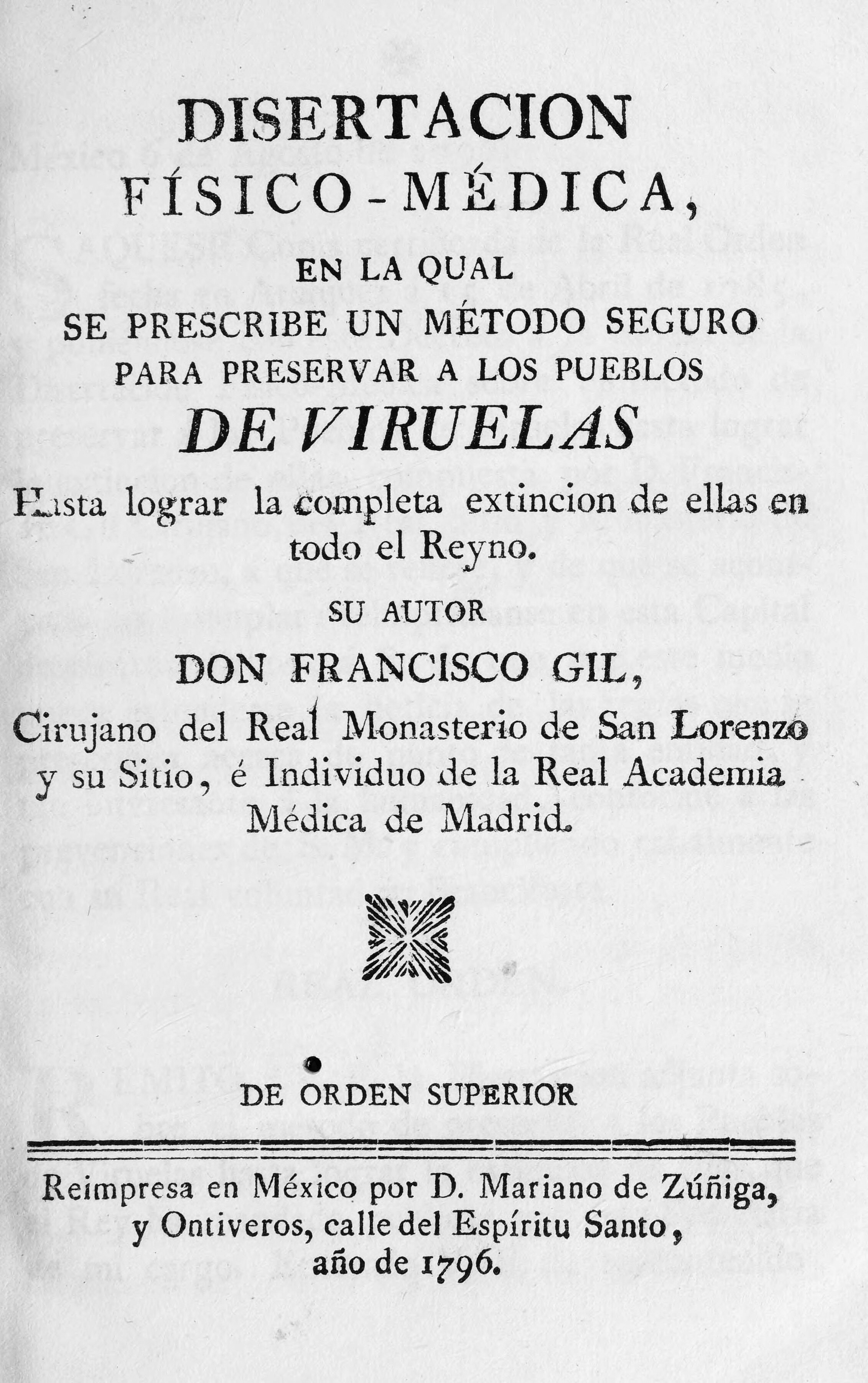
By examining the intersection of power, knowledge, and government, Foucault’s analysis of biopolitics offers critical insights into the ways in which power operates to shape and regulate bodies and populations in modern societies (Lemke, 2011). When, in August of 1797, the viceroy Marquis of Branciforte received the report on smallpox epidemic, presented by José Ignacio García-Jove, president of the Real Tribunal de Protomedicato,9 he issued a series of orders aimed at tackling the advance of the disease, following the provisions in the Disertación Físico-Médica drawn up by Francisco Gil (Figure 1), which included the use of inoculation as a last resort, i.e. when all preventive containment measures had failed to reduce the force of the epidemic (Apffel, 1990).10 Inoculation, which had been widely used for centuries in the East and in some cases also in Western Europe, had several critical aspects linked to the possibility of an infection that was in any case fatal or the spread of secondary infections that were no less dangerous, linked to the poor level of disinfection (Cook, 1942; Thompson, 1993).
Source: Google Books
The main means of tackling the epidemic highlighted by Gil were based on the immediate isolation of the infected and the creation of a cordon sanitaire around those villages where smallpox cases had been detected. The cordon sanitaire was the most difficult measure to implement due to the high mobility of people even in rural areas and the spread of small businesses and necessary supplies. The other aspect of combating the epidemic was based on the care and treatment of the infected, in particular through the disinfection of vesicles and the containment of fever. Finally, Gil prescribed the use of distant cemeteries to bury the virulent corpses, which was immediately established by order of viceroy (Rodríguez, 2001).
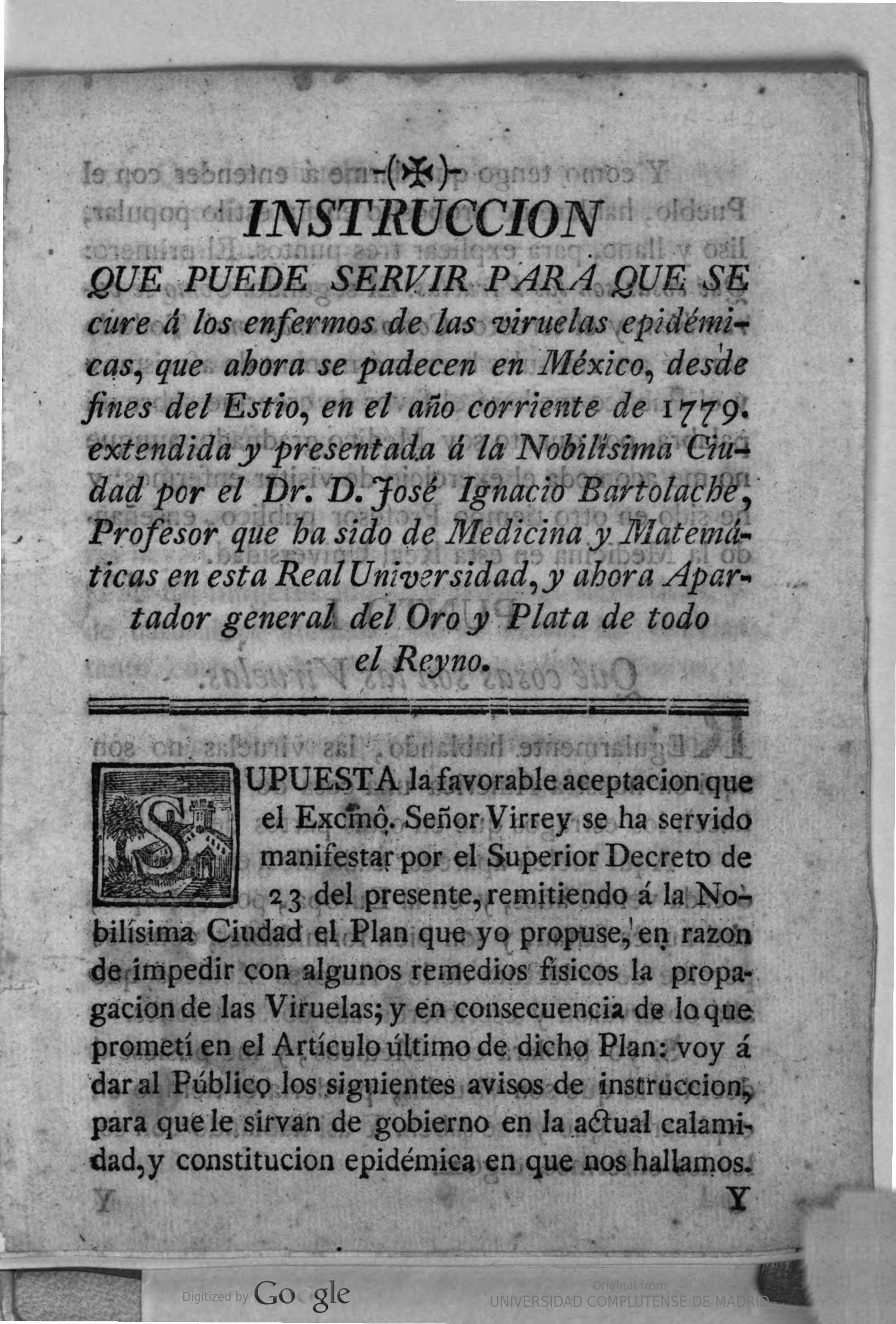
Branciforte also ordered the reprinting of the pamphlet written by José Ignacio Bartolache during the 1779 epidemic, which described the characteristics of smallpox, morbidity, the vehicles of contagion (known at the time), the treatments that could be used and the precautions to be taken against the disease. Thus, on 23 February 1797, the book Instrucción que puede servir para que se cure a los enfermos de las viruelas epidémicas (Instruction that Can Be Used to Cure the Sick of Epidemic Smallpox) was reprinted (Figure 2). Bartolache’s text did not present any major innovations from an epidemiological point of view, but it did have the advantage of recommending measures of containment and care that were already known to the population and therefore more easily accepted (Molina del Villar, 2008).
Source: Google Books
Despite everything, there were episodes of revolt caused by the forced segregation of the infected in some areas of the interior, as in the case of Teutitlan del Valle in the Oaxaca area, where in October 1796 the natives violently rebelled against the segregation imposed by the authorities on those infected with smallpox (Archivo General de Indias (AGI), Estado, 25.54). In addition, the viceroy on 28 February 1797 issued a circular, in which he included the opinions proposed by the Real Tribunal de Protomedicato and that of the Fiscal de lo Civil y Asesor General Comisionado,11 which proposed the most appropriate measures against the disease. Among these, it was indicated that in every town a house should be designated in a distant place, opposite the wind, so that the sick could be cared for there. It was notified that doctors and parish priests were designated as viceregal authorities to act against the epidemic. Sociedades de Caridad (charities) were established to provide assistance and relief to the poor infected.12 Any person going out or passing through any infested place was isolated. The use of bonfires was recommended to purify the air in places where there were infected people. Finally, the use of inoculation was prescribed, only in case the epidemic could not be controlled by the previous actions (AGI, Estado, 26.50).
Statistics play a crucial role in the normalisation and classification of populations. Through demographic data, government agencies and institutions categorise individuals into different social groups based on criteria such as age, gender, race, and socioeconomic status. This process of classification serves to produce knowledge about populations, identifying patterns, trends, and deviations from the norm. Normalisation operates through statistical techniques that establish norms and standards against which individuals and populations are measured (Miller, 2001). Statistical averages, distributions, and deviations become benchmarks for assessing individual behaviours and characteristics, determining what is considered normal or abnormal within society. This normalisation process shapes not only how populations are governed but also how individuals perceive themselves and others (Curtis, 2002).
Statistics function as a mechanism of surveillance, enabling the collection, analysis, and monitoring of population data by governmental authorities and institutions. Through census surveys, health records, and administrative databases, vast amounts of information are gathered and processed to track demographic trends, health outcomes, and social indicators. This surveillance apparatus allows governments to identify and address perceived social problems, risks, and threats to public order (Rusnock, 1999). The use of statistics for surveillance purposes extends beyond monitoring individuals’ behaviours to encompass broader population management strategies. Governments employ statistical data to allocate resources, plan public services, and implement social policies aimed at addressing perceived deficiencies or inequalities within society. This biopolitical dimension of surveillance involves governing populations to enhance their overall well-being and productivity, thereby reinforcing social order and stability (Mader, 2007).
Statistics also contribute to the normalisation of knowledge and expertise within modern societies. Statistical techniques and methodologies become institutionalised within fields such as economics, sociology, and public health, shaping the production and dissemination of knowledge about populations. Experts and professionals in these domains wield statistical expertise as a form of authority, legitimising their interventions and recommendations in government processes. The normalisation of statistical knowledge operates through discourses of objectivity, rationality, and expertise, which position statistical experts as impartial arbiters of truth and reason. This normalisation process reinforces the authority of technocratic elites and marginalises alternative forms of knowledge and expertise within society (Diaz-Bone, 2019).
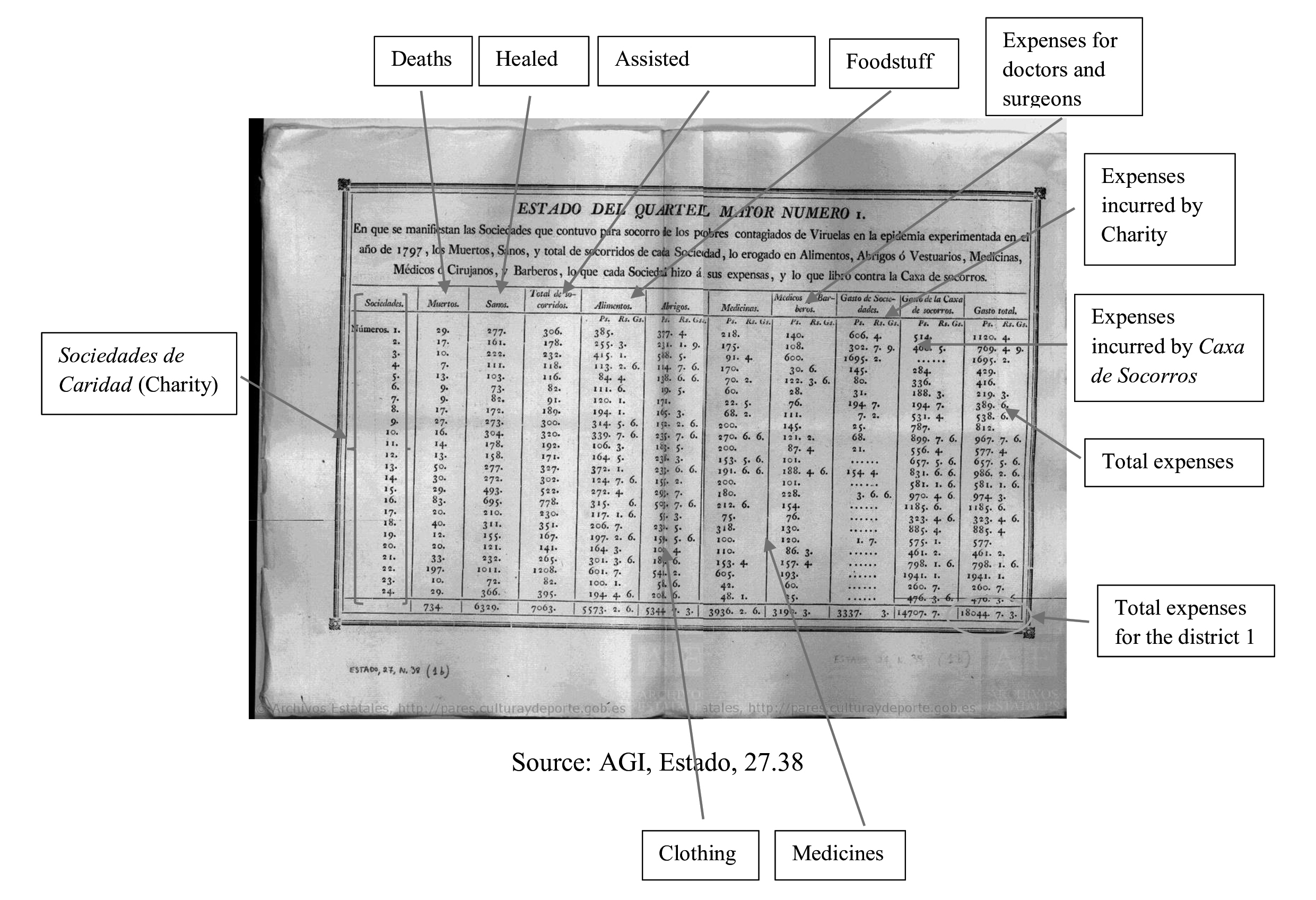
Detailed knowledge of the impact of the epidemic on the population of New Spain, and Mexico City in particular, was one of the main problems that the viceroy set himself, in order to activate the necessary containment procedures and to follow its evolution (Cramaussel, 2008). For this reason, the Sociedades de Caridad and parishes were entrusted with the task of taking a census of the infected people, those vaccinated and those who died (Flynn, 1989). The Sociedades de Caridad presented eight summary tables, one for each of Mexico City’s main districts, reporting statistical data on epidemic (O’Gorman, 1960).
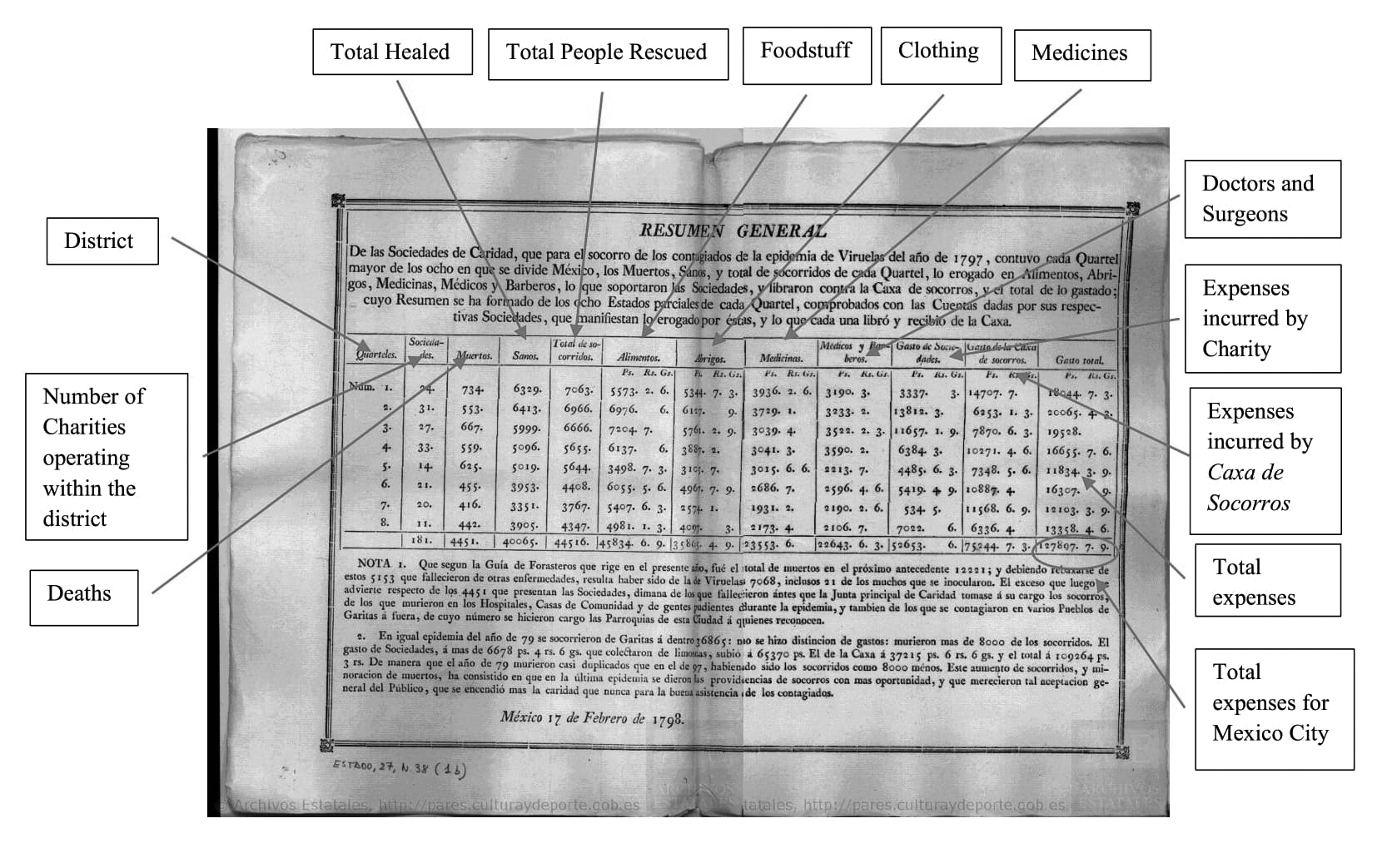
As can be seen from Figure 3, which shows the data for Mexico City’s district 1, we can determine the information that was transmitted to the Junta Principal de Caridad (coordinating body of all charities led by viceroy) and from it to the viceroy. This information concerned the number of charitable societies operating in the neighbourhood (identified with a number), the number of deaths, the number of healed, and the total number of assisted. In addition, expenses were reported divided by expenditure on food, clothing, medicines and payment for doctors and surgeons. Two further columns showed the expenses incurred directly by the various charitable societies and the Caxa de Socorros (relief fund) set up by the viceroy. In the last column, the total expenditure incurred was noted (AGI, Estado, 27.38).
Source: AGI, Estado, 27.38
As can be seen from Figure 3 in Mexico City, the surveys of disease trends and the expenses incurred by each individual Sociedad de Caridad operating in the neighbourhood were carried out extensively. Figure 4 reconstructs the use of biopolitics and government of population, also relating the measure adopted to face the epidemic with the maintenance of bodies and the control of expenses.
Source: AGI, Estado, 27.38
The general balance sheet of relief activities (Figure 4) shows that 181 charities operated in the eight districts of Mexico City, a total of 4451 deaths were recorded, while 40,065 were cured, for a total of 44,516 relief operations. A total of 45,834.6.9 pesos were spent on food; 35,805.4.9 pesos on clothing and 23,553.6 pesos on medicines. In addition, doctors and surgeons were paid a total of 22,643.6.3 pesos. The charities together incurred expenses of 52,653.6 pesos, while the Caxa de Socorros paid 75,244.7.3 pesos; general assistance expenses for the smallpox epidemic amounted to 127,897.7.9 pesos for Mexico City alone (AGI, Estado, 27.38). We can highlight that Caxa de Socorros contributed about 59% of the total expenses incurred, while charities contributed 41%. Of the total expenses, about 36% was spent on food, 28% on clothing, 19% on medicines and 17% on the salaries of doctors and surgeons. It is interesting to note how the statistical data on the progress of the epidemic (dead, cured, infected) necessary for government biopolitics are interrelated to those on the expenditure incurred. Public expenditure actively and visibly enters government practices in the form of accountability for actions taken.
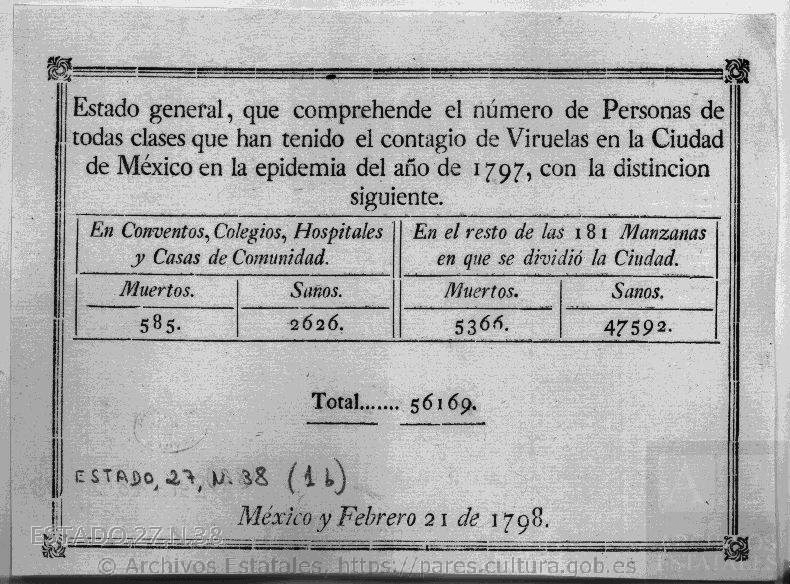
The balance shown in Figure 5 shows that during the smallpox epidemic in 1797, there were 56,169 infected, of whom 3211 were clergymen, friars, nuns, inmates and college students (585 dead and 2626 cured) and 52,958 were other inhabitants of the city (5366 dead and 47,592 cured). The total number of deaths was 5951 (AGI, Estado, 27.38). Assuming that Mexico City had approximately 120,000 inhabitants at the time, we can assume a mortality rate of 4.95% (i.e. 49 deaths per 1000 inhabitants), while the infectiousness rate was 46.8% (i.e. 468 infected per 1000 inhabitants) (AGI, Estado, 20). The general statistical picture of the course of the smallpox epidemic in Mexico City offers interesting food for thought due not only to the numerical data resulting from the action of the disease, but also to the division of the infected into social categories. This would suggest an idea of the definition of urban society in Mexico City, fully functional to a governmental mechanism.
Source: AGI, Estado, 27.38
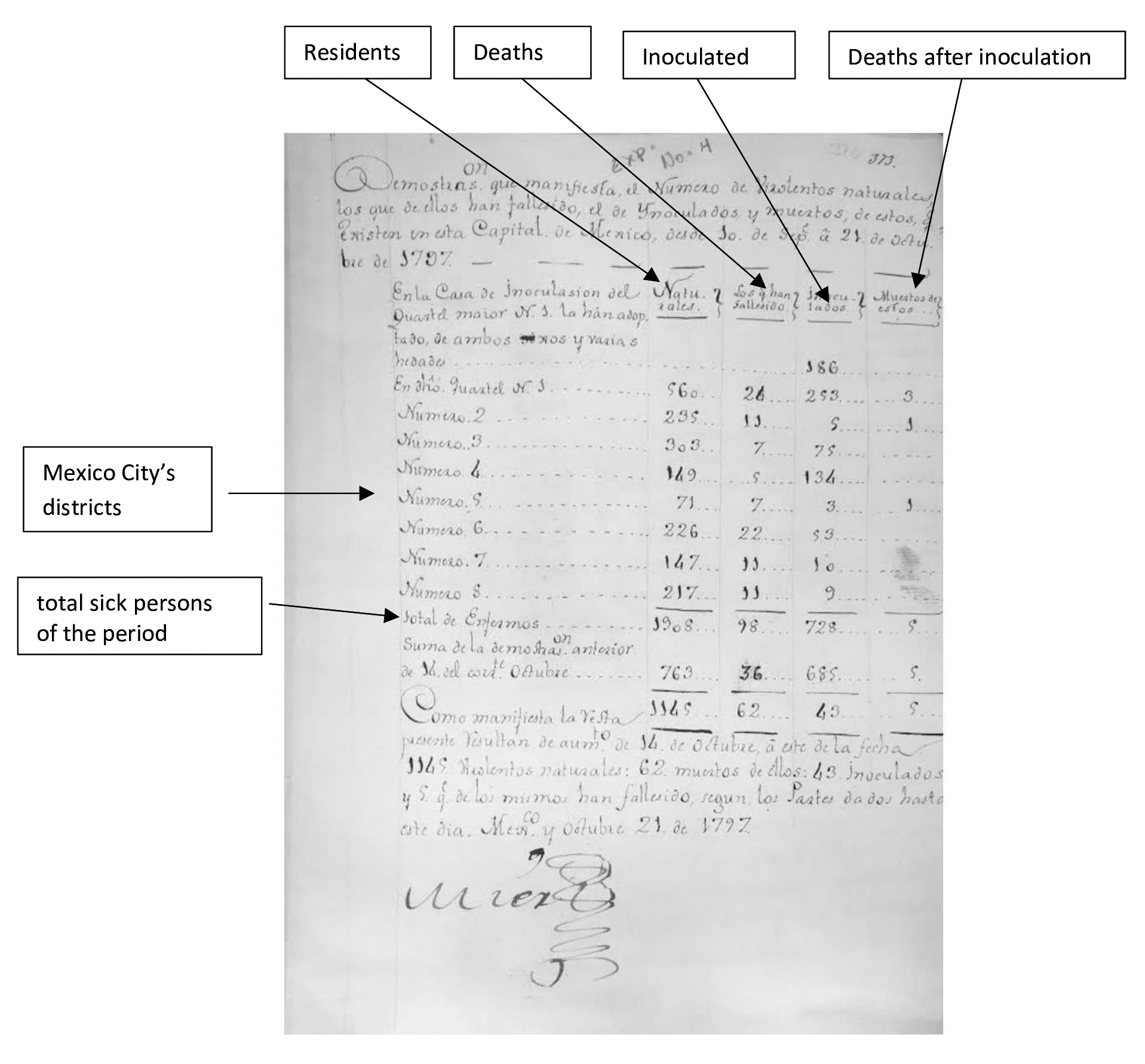
Figure 6 shows the statistical summary of the inoculations carried out in the eight districts of Mexico City. From this document one can see the number of infected, inoculated and dead during the period from 1 September to 21 October 1797. Out of 1908 infected in total, there were 98 deaths and 728 inoculated (38% of the registered infected). Finally, the statistics report five deaths as a result of inoculation.
Source: AGN, Epidemias, vol. 1, exp. 4
Statistics and reports (also printed) constitute the fundamental element of the communication carried out by the viceroyal power. Communication practices respond to two principal needs. First, they provide the central power (in Madrid) with an element of accountability and measurability of the viceroy’s work in Mexico City. Secondly, they strengthen the legitimacy of the viceroy vis-à-vis the local elites, who are part of the governmental process. The communicative practices play a crucial role in shaping government activity and exercising power within societies. Discourses, knowledge production, and communication techniques are employed by governments to govern populations. Communicative practices are instrumental in the formation of subjectivities, or the ways in which individuals understand themselves and their place within society. Governments employ discourses that define norms, values, and identities, influencing how individuals perceive themselves and others (Miller, 1990). The document shown in Figure 6 probably constitutes the most effective example of the use of biopolitical tools in colonial governance during the smallpox epidemic. The statistical data on residents, infected, inoculated (i.e. treated with infected biological material) and deaths as a result of inoculation can be considered as one of the earliest tools for verifying the effectiveness of emergency health policies.
On 30 December 1797, Viceroy Branciforte wrote to Manuel Godoy, Secretary of State, to update him on the progress of the disease and the containment measures taken. Interestingly, the viceroy, when reporting on the establishment of the Junta Superior de Caridad and the Sociedades de Caridad, reiterates the effectiveness of the latter’s action and their ability to assist the sick directly at their homes, relieving the burden of patients in the city’s hospitals, which were already under stress. Lastly, the viceroy reiterates that the viceroy government’s welfare action is based almost exclusively on funds collected from the population and charity, not affecting the budget and therefore preserving ‘sin grabamento de los fondos publicos, ni el de pensiones y nuevos arbitrios’ (without new expenses of public funds, neither of pensions nor of new taxes and levies), denoting a precise focus on the use of public funds (AGI, Estado, 26.92).
The eighteenth century marked a crucial period in the history of New Spain. This era witnessed the consolidation of colonial power structures, characterised by the intersection of technocratic models and governmental practices. By examining the insights of Michel Foucault, this essay tried to explore how these frameworks illuminate the dynamics of government in colonial New Spain during the eighteenth century, using the case study of the smallpox epidemic in 1797. Foucault’s conceptual framework offers a lens through which to understand the disciplinary mechanisms inherent in technocratic models of government. In the context of New Spain, bureaucratic systems were instrumental in exerting control over colonial subjects and maintaining hierarchical structures. Foucault’s notion of biopolitics becomes particularly relevant in understanding how these technocratic models operated to manage populations, shaping both individual behaviour and societal norms to serve colonial interests. The research offers insights into the communicative dimensions of governmental practices, highlighting the role of discourse and negotiation in legitimising the political role of viceroy. The legitimacy of power is established through bureaucratic procedures and legal frameworks, engaging in communicative rationality to justify its authority (Prodi, 1994). In this case, the example is given to us by the interaction of the viceroyal government with charitable societies, typically bottom-up institutions.
The research highlighted the importance of the formation of the viceroy Marquis of Branciforte, which was functional to the exercise of a new political power based on the use of new technologies of government. In this sense, the eighteenth century, as far as the Spanish viceroys of America were concerned, represented an attempt to rationalise and centralise colonial power through more direct control of the population, including its biological aspects. The governmental process affected various aspects of colonial government, which involved the reform of local government, the tax system, labour relations and, not least, the participation of Creole elites in government. The management of the smallpox epidemic and the consequent management of the bodies is, therefore, only one part of the whole governmental apparatus set up by the Spanish government. However, it is a part that effectively explains the paradigm shift in the management model and the importance given to new rationalisation practices.